
Master the Odds: Your Guide to the Best Casino Games
Casino games are structured activities where players wager money on outcomes determined primarily by chance, with some incorporating elements of skill. The core value of these games lies in their ability to provide immediate, risk-based entertainment, where a small initial bet can lead to significant payouts. Players use them by selecting a game like blackjack or roulette, placing a wager, and then waiting for a randomized result to determine their winnings or losses.
Beyond Luck: Understanding House Edge Mechanics
The house edge isn’t luck; it’s the mathematical engine that ensures the casino’s profitability over time. Every casino game has this built-in statistical advantage, from the single zero on a roulette wheel to the dealer standing on soft 17 in blackjack. Understanding this mechanic transforms your play from hopeful guessing to strategic awareness. You must accept that while short-term wins are possible, the edge dictates the long-term mathematical outcome. Choosing games with a lower house edge, like baccarat or certain video poker variants, is the only practical way to mitigate the casino’s inherent advantage. Your goal is not to beat the house, but to manage cd33 risk intelligently against its guaranteed margin.
How probability distributions shape long-term outcomes
Probability distributions define the exact likelihood of every possible outcome, which directly determines long-term results. In games like roulette, the binomial distribution shows that over thousands of spins, the frequency of any number landing converges precisely to its theoretical probability—1 in 37 for European roulette. This convergence forces the player’s net loss to approach the house edge, as the distribution’s expected value (mean) is negative. The variance of the distribution dictates short-term volatility, but repeated trials compress the range of possible results, making expected probability convergence inevitable. Thus, a blackjack player who deviates from basic strategy shifts the distribution’s center, worsening long-term losses.
- The distribution’s expected value calculates the average loss per bet, embedding the house advantage into countless outcomes.
- Variance defines the spread of possible short-term wins or losses, but large sample sizes reduce this spread relative to the mean.
- Trials tracking observed frequencies against the distribution reveal that luck fades, and the theoretical probabilities dominate over time.
The math behind table limits and player returns
Table limits aren’t arbitrary; they are a direct mathematical shield for the house edge. A $10 minimum and $500 maximum on a roulette wheel cap your potential recovery from a bad streak, ensuring the casino’s statistical advantage, say 5.26% on a double-zero wheel, is never overcome by a player doubling bets. This ceiling means effective bankroll management is mathematically pointless beyond a certain point, as the max bet prevents the classic Martingale double-up strategy from ever fully recovering a loss. Returns are therefore bounded by a short-term volatility that the limit structure controls precisely.
- Table limits mathematically cap the effectiveness of progressive betting systems like Martingale.
- Maximum bets ensure the house edge remains the dominant long-term factor in player returns.
- Minimum bets define the minimum rate at which the house edge extracts value per hand or spin.
Slot Volatility: High Risk vs. Low Risk Strategies
Slot volatility dictates the frequency and size of payouts. High-risk strategies favor games with large jackpots but long dry spells, suitable for big-budget players chasing a single, massive win. Low-risk strategies target games with frequent, small wins, preserving bankroll for extended play. What is the core trade-off? High risk offers infrequent, large rewards while low risk provides consistent, smaller returns, directly aligning with your risk tolerance and session goals. Choose a volatility that matches your bankroll’s capacity to withstand losing streaks or grow slowly.
Decoding RTP percentages and hit frequency
Decoding RTP percentages and hit frequency is essential for aligning slot choice with risk tolerance. RTP, or Return to Player, is a theoretical long-term payout percentage, while hit frequency measures how often a spin produces a win. A high-volatility slot often combines a high RTP with a low hit frequency, meaning larger but rarer payouts. Conversely, low-volatility slots typically feature slightly lower RTPs with a high hit frequency, delivering frequent small wins. The key is that RTP alone doesn’t reveal the thrill; you must compare it with hit frequency to predict session behavior. Hit frequency and RTP correlation dictates bankroll pace. Q: How do RTP and hit frequency interact in high-volatility games? A: High-volatility games often have a high RTP (e.g., 96%+) but a low hit frequency (e.g., 20-30%), meaning you risk longer losing streaks for a chance at larger rewards.
Choosing between progressive jackpots and fixed pays
When choosing between progressive jackpots and fixed pays, the decision directly shapes your risk strategy. Fixed pays offer predictable, frequent returns, making them ideal for low-risk bankroll management. Progressive jackpots, however, demand high-risk patience for a life-changing win, often requiring max bets to qualify. For a balanced slot volatility approach, follow this sequence:
- Assess your session budget; if small, stick with fixed pays for sustained play.
- If chasing a megapot, allocate a separate «lottery fund» exclusively for progressive games.
- Switch to fixed pays after a jackpot loss to recoup without deepening risk.
This keeps your strategy dynamic, not destructive.
Card-Counter’s Playbook: Blackjack Variants Revealed
Card-Counter’s Playbook: Blackjack Variants Revealed is your essential guide to mastering the subtle rule changes across casino games like Spanish 21, Double Exposure, and Pontoon. It moves beyond basic strategy by detailing how each variant’s unique deck composition or payout structure shifts the player’s edge. You will learn to identify which games offer the most favorable penetration for counting systems, and which to avoid due to restrictive dealer actions. This playbook reveals that the true advantage lies not in memorizing a single count, but in adapting your bet spread to the variant’s specific vulnerabilities. Ultimately, it arms you with the tactical flexibility to exploit any blackjack table you encounter.
European vs. American rule differences
In blackjack, the biggest difference between European and American rules is the dealer’s hole card. American games let you peek at the dealer’s down card for insurance, but European dealers stick with a single face-up card until you’ve played, so you can’t double after a split as freely. This shifts your strategy: with European no-peek rules, you’ll stand more often on stiff hands to avoid losing double bets to a natural blackjack. The table below breaks down key contrasts.
| Aspect | American | European |
|---|---|---|
| Dealer hole card | Checked for blackjack early | Only after player actions |
| Double after split | Commonly allowed | Rarely permitted |
| Surrender | Often available | Standard no surrender |
Splitting, doubling, and insurance decisions
For the card counter, splitting, doubling, and insurance decisions shift from basic strategy to nuanced vulnerability exploitation. Insurance, offered when the dealer shows an Ace, is mathematically a side bet against a natural blackjack; you only take it when the remaining deck has a high count of tens. Doubling down, which risks extra cash for one more card, becomes profitable on stiff hands like 10 or 11 when the count is strongly positive. Splitting pairs, particularly 10s, is avoided in most counts, but splitting 8s against a dealer 7 becomes a high-value move when the deck is rich in small cards. These moves require strict index-based adjustments.
A card counter accepts insurance only at a positive true count, doubles down more aggressively on high counts, and splits pairs to maximize variance when the deck composition favors it.
Roulette’s Hidden Patterns: Betting Systems Debunked
Many players chase Roulette’s Hidden Patterns: Betting Systems Debunked under the false belief that past spins influence future outcomes. The Martingale, Fibonacci, and D’Alembert systems all claim to exploit statistical sequences, but they fail against the game’s core mechanic: each spin is an independent trial.
No betting progression can overcome the house edge of 2.7% on a single-zero wheel.
These systems simply create short-term variance, masking the long-term mathematical certainty of loss. The only hidden pattern in roulette is the random sequence itself, which guarantees no reliable betting strategy exists.
Inside vs. outside wagers and their payout ratios
Inside wagers, such as straight-up bets on a single number, offer towering payout ratios like 35:1 but suffer from abysmal win probability. Outside wagers, like red/black or odd/even, trade that excitement for nearly 50% coverage of the wheel, returning only even money (1:1). Payout ratios directly mirror risk, meaning a corner bet (8:1) sits between these extremes. The true edge lies in recognizing that no payout ratio ever compensates for the house’s built-in odds.
- Straight-up bets pay 35:1 but cover only 2.7% of the wheel (European).
- Outside wagers like columns pay 2:1 but cover 32.4% of outcomes.
- Even-money bets (red/black) offer the lowest payout ratio (1:1) with the highest chance to win.
Martingale, Fibonacci, and reverse strategies
Martingale, Fibonacci, and reverse strategies are betting progressions players apply to wagering patterns. The Martingale doubles the bet after each loss, aiming to recover all losses with a single win, but risks rapid bankroll depletion during a losing streak. The Fibonacci system follows a sequence where the next bet is the sum of the two previous losses, offering slower progression but still escalating risk. Reverse strategies, like the Paroli, increase bets after wins to capitalize on hot streaks while limiting downside, requiring strict profit-taking. Risk and reward dynamics define these systems, yet none alter the game’s house edge.
| Strategy | Bet Change After Loss | Bet Change After Win | Primary Risk |
|---|---|---|---|
| Martingale | Double | Reset to base | Large loss streak |
| Fibonacci | Next sequence number | Two steps back | Long recovery sequence |
| Reverse (Paroli) | Reset to base | Double (up to 3 wins) | Losing streak on base |
Poker Room Dynamics: Skill-Based vs. Chance Heavy
In the casino, poker rooms sit apart because the house doesn’t play—players face each other, making it more skill-based than chance-heavy slots or roulette. Your decisions on hand selection, bet sizing, and reading opponents directly affect the outcome, though luck still deals the cards. A short Q&A: «Is poker pure skill?» No—chance matters in the short run, but skilled players win consistently over time. Unlike games with fixed house edges, poker rewards study and practice; a beginner often loses to a regular, not the casino.
Texas Hold’em tournament structures
Texas Hold’em tournament structures dictate the skill-to-chance ratio by controlling blind levels and stack sizes. A deep-stack structure, with slow-rising blinds and starting stacks of 100 big blinds or more, rewards post-flop proficiency and minimizes early all-in luck. Conversely, a turbo structure with rapid blind increases forces frequent all-ins, amplifying variance and reducing skilled edge. The payout distribution also matters: flatter payouts near the bubble encourage strategic aggression, while top-heavy structures favor survival tactics. These structural choices directly determine whether a tournament leans toward skill or chance for participants.
Tournament structures in Texas Hold’em balance skill and chance through blind progression speeds and stack depths, impacting player strategy and outcome predictability.
Video poker optimal hold strategies
Unlike slot machines, video poker lets you influence the outcome through optimal hold strategies. These are mathematically proven decisions for which cards to keep and which to discard based on your hand and the paytable. For example, in Jacks or Better, you always hold a high pair over a four-card flush draw. The key is memorizing these strategy tables to reduce the house edge near zero. Q: Why can’t I just go with my gut for holds? A: Because intuition often prioritizes flashy draws (like chasing a straight flush) over the higher long-term expected value of a low pair or a high card hold.
Dice Games: Craps Betting Ladders
In casino games, craps utilizes betting ladders as a structured progression for wagers on the Pass Line and Come bets. Players typically start with a flat bet, then increase their stake by placing «odds» behind the initial wager, which pay true mathematical odds. This laddering continues by taking maximum odds, increasing the player’s payout potential without altering the house edge on that portion. Some players also ladder additional Come bets, creating multiple active points. The strategy allows bankroll management while maximizing returns on favorable outcomes, though it requires understanding the game’s odds and table limits.
Pass line, come bets, and odds multipliers
The foundational craps betting ladder begins with the Pass line bet, which wins on the come-out roll of 7 or 11 and loses on 2, 3, or 12. Once a point is established, a Come bet operates identically, moving to a new point number on the next roll. Both bets gain maximum advantage when you add an Odds multiplier, a behind-the-bet wager that pays true odds with no house edge. To optimize play:
- Place a minimum Pass line bet before the come-out roll.
- After the point is set, take the maximum Odds multiplier the table allows.
- Use Come bets to cover additional numbers, and back each with further Odds.
Place bets versus proposition wagers
In craps betting ladders, Place bets offer a strategic middle ground by allowing you to wager on specific numbers (4, 5, 6, 8, 9, or 10) after a point is established, paying true odds minus a built-in house edge of 1.52% to 4.00%. This contrasts sharply with proposition wagers, which are single-roll bets on outcomes like «any seven» or «snake eyes.» While proposition bets offer high payouts (e.g., 30:1 on a hard eight), their staggering house edge, often exceeding 11% and reaching up to 16.67%, makes them highly disadvantageous for bankroll longevity. Place bets, by focusing on favorable numbers, provide consistent action without the rapid depletion caused by long-shot proposition wagers.
Live Dealer Tech: Real-Time Play Innovations
In a darkened studio, the dealer fans the cards under multiple high-definition cameras, their every gesture streamed to your screen without perceptible lag. This real-time play innovation uses optical character recognition to instantly translate physical card values into digital data, populating the virtual betting interface as the wheel spins. You watch the roulette ball settle against a felt pocket on a dedicated wheel, not a random number generator, because the outcome is determined by physics captured at 60 frames per second. Chat commands prompt the dealer to adjust the shoe’s cut card, offering a degree of player agency impossible in automated games. The tactile snap of a card being slid from a shuffler becomes your cue to act, synchronizing digital response with analog rhythm. Each round is a seamless loop of broadcast-grade video and instantaneous game logic, collapsing the distance between a brick‑and‑mortar table and your living room.
Streaming latency and game fairness certifications
Streaming latency directly impacts game fairness in live dealer casino games, as delays between a player’s action and the dealer’s response can create exploitable information asymmetries. Certified platforms implement sub-second latency thresholds verified by third-party testing, ensuring the video feed syncs precisely with actual table outcomes. To maintain fairness, casinos use real-time latency monitoring to detect and correct drift. The certification process follows a clear sequence:
- Latency is measured via timestamped packet analysis between the player device and the studio server.
- Rigorous shuffle and RNG audits confirm no time-based advantage emerges from transmission delays.
- Continuous compliance checks ensure latency remains within the certified tolerance window for all players.
Interactive chat and camera angles
Interactive chat and camera angles form the backbone of live dealer immersion. The chat interface lets players converse with dealers and peers in real time, replicating the social dynamic of a physical table. Meanwhile, multi-angle camera arrays allow users to toggle between close-up views of cards or roulette wheels and wide shots of the studio, ensuring no action is missed. Seamless switching between these feeds—often via a responsive control panel—enhances transparency and strategic decision-making, as players can scrutinize every deal or spin from the optimal perspective.
- Low-latency chat ensures dealer responses feel natural, not delayed.
- Camera presets often include a “pit view” for broader table context.
- Pinch-to-zoom functionality on mobile lets players focus on specific felt areas.
- Picture-in-picture modes overlay chat without blocking the main game view.
Mobile Wagering Trends: Touchscreen Optimization
Touchscreen optimization now dictates how mobile wagering flows for casino games. Slots respond to vertical swipes for reel spins and horizontal flicks for betting adjustments, eliminating clunky button presses. Blackjack and poker tables feature tap-and-drag mechanics, letting players split cards or raise stakes directly on the felt. Haptic feedback is critical, vibrating briefly on valid bets or card draws to confirm actions without visual checks. Roulette wheels spin faster with circular finger gestures, while chip values change via pinch-to-zoom. Every interface element is sized for thumb reach, minimizing accidental taps. The shift is from tapping to intuitive, fluid manipulation—turning the phone into a tactile game surface that mirrors physical casino interaction. This precision keeps sessions immersive and error-free.
Gesture-based controls for speed play
Gesture-based controls for speed play transform rapid wagering into intuitive, physical actions. In fast-paced casino games, a quick upward flick can confirm a high-stakes bet, while a circular swipe resets the wager instantly. This eliminates button-tapping lag, letting players chain decisions at full velocity. The core mechanic relies on swipe-driven rapid betting, where a single fluid motion places and locks in the next spin. Double-tap and pinch gestures further accelerate repetitive actions, like doubling down or cashing out mid-round. These inputs demand precise finger placement, yet reward muscle memory with seamless, split-second interactions that keep the game’s momentum entirely under the player’s command.
Battery drain and data usage considerations
Optimized touchscreen controls help reduce efficient mobile gambling data usage, but high-speed animations still suck your battery. Spinning reels and live dealer streams constantly fire the display and processor, especially on OLED screens where bright colors drain faster. Turn on low-power mode and download your favorite slots over Wi-Fi instead of streaming them – this slashes both battery drain and mobile data consumption during long sessions. Background processes like auto-loading game assets also chew through your allowance.
- Disable auto-play features, as they run the game continuously without breaks to save battery.
- Lower screen brightness and turn off haptic feedback to extend playtime per charge.
- Use a dedicated gambling app instead of a browser to reduce data overhead from page reloads.
- Set app updates to Wi-Fi only so they don’t eat into your cellular data cap overnight.
Responsible Wagering: Bankroll Management Tactics
You set a loss limit of fifty dollars for the night at the blackjack table, a standard bankroll management tactic. As the cards run cold and you hit thirty down, the decision looms. Q: How do you enforce a stop-loss mid-session when the game tempts you to chase? A: You pre-set a hard cash boundary and physically step away from the table the moment you hit it, treating that boundary as a game rule you cannot break. Sticking to this tactic turns a potential tilt-driven drain into a disciplined exit. By dividing your session bankroll into smaller bets, you ensure each wager represents a fixed percentage of your total, allowing you to ride variance without risking ruin. This practical method keeps the game engaging while protecting your funds from impulsive decisions.
Setting loss limits and session timers
Setting strict loss limits and session timers before engaging in any casino game is a foundational tactic for protecting your bankroll. A loss limit, defined as the maximum amount you are willing to lose in a single session, should be a fixed, non-negotiable number calculated as a small percentage of your total wagering funds. Session timer enforcement prevents the cognitive decay that occurs during extended play, where emotional fatigue often leads to poor bets. Even a fifteen-minute timer can disrupt a losing streak by forcing a deliberate cool-down period. Pre-set these controls within your player account or use an external alarm, and stop playing the moment either parameter is reached, regardless of the game’s current momentum.

Identifying tilt and emotional betting cues
Recognizing when frustration shifts your focus from strategy to impulse is the first win against tilt. In casino games, watch for chasing losses with larger bets, a racing heartbeat, or the urge to «prove yourself» after a bad beat. Emotional betting cues often manifest as sudden rule-breaking, like increasing bet sizes in blackjack when you’re down. Ignoring a cold streak’s statistical reality can fuel a cycle of rash decisions. Catching these signals early preserves your bankroll and mental clarity.
Identifying tilt means spotting when your bets become reactions to emotion, not calculated moves.
Future Game Design: VR and Crypto Integration
In the future, a player dons a VR headset and walks into a digital casino where the crypto-integrated slot machines shimmer with live blockchain animations. Pulling the lever triggers a smart contract that instantly pays out a winning hand in fractions of Bitcoin, recorded on an immutable ledger. Around the blackjack tables, avatars use VR hand gestures to place chips backed by Ethereum, with every shuffle and deal verified by a transparent, decentralized system. This fusion of immersive environments and virtual reality gambling removes the delay of cashouts and the suspicion of rigged odds, letting you feel the felt beneath your fingertips while your wallet remains cryptographically secure.
Virtual reality immersive table setups
In future casino game design, virtual reality immersive table setups replace flat screens with spatially tracked environments where you physically lean over a felt surface to place chips. Your hands, rendered via motion controllers, push actual-looking cards or roll dice with realistic physics. Haptic feedback from the table surface simulates the tactile resistance of chip stacks and card edges. Audio is spatialized to match a live dealer’s voice from a specific chair direction. These setups require a minimum play area of 2×2 meters to avoid controller collisions during arm movements.
- Eye-tracking enables contextual chip stacking and gesture-based call/raise actions without menu navigation.
- Direct hand-over-hand interaction with a 3D felt layout mimics real table geometry for bluffing tells.
- Variable table scale lets you zoom to inspect opponent avatar micro-expressions at simulated close range.
Blockchain-based provably fair algorithms
Blockchain-based provably fair algorithms let you verify each hand or spin’s outcome was truly random, without trusting the casino. In future VR casino games, this decentralized fairness verification happens instantly in your headset. To check a game’s integrity, you typically follow this sequence:
- Copy the server’s encrypted seed and your client seed from the game interface.
- Paste both seeds into a public verifier tool or smart contract.
- Compare the resulting game hash with the one shown after your bet — if they match, the result was genuinely random and unaltered.
This means you can prove no house manipulation occurred, even in immersive VR slots or poker rooms.
Bonus Structures: Welcome Offers and Wagering Requirements
Welcome offers are designed to boost your initial bankroll, often matching your first deposit with bonus funds or free spins. However, these bonuses come with wagering requirements, which dictate how many times you must bet the bonus amount before you can withdraw winnings. For example, a 100% match bonus with a 35x wagering requirement on slot games means you must wager your bonus 35 times. Always prioritize lower wagering requirements to increase your chances of converting bonus funds into real cash. Q: How do wagering requirements affect your slot strategy? A: They force you to play through the bonus multiple times, so choose slots with high RTP to reduce the house edge and meet requirements efficiently.
Deposit matches, free spins, and cashback deals
Deposit matches instantly multiply your bankroll, often doubling or tripling your first deposit for more gameplay on slots or table games. Free spins target specific slot titles, letting you win real money without risking your own funds. Cashback deals refund a percentage of net losses, softening the blow of a losing streak. These offers vary by game contribution; slots typically count 100% toward wagering, while blackjack or roulette may contribute less. For optimal value, prioritize low-wagering bonuses to convert bonus funds efficiently. Always verify game restrictions and maximum bet limits before claiming.
| Bonus Type | Key Feature | Best For |
|---|---|---|
| Deposit Match | % of deposit added as bonus | Building a larger bankroll |
| Free Spins | Complimentary slot rounds | Trying new slots risk-free |
| Cashback | Refund on net losses | Minimizing session loss impact |
Clearing playthrough rates efficiently
Clearing playthrough rates efficiently means focusing your play on games with the highest contribution percentages. Slots usually count 100%, while table games often contribute much less, so stick to slots for the fastest wagering progress. Always check the game’s fine print before you spin, since some titles are excluded entirely. To speed things up, optimize your bet size around the wagering limit—betting too small drags the process out, but betting more than necessary risks your bankroll before you finish.
- Prioritize high-contribution slots over low-payout table games.
- Match your bet size to the wagering requirement without overexerting your budget.
- Avoid excluded games to prevent wasted spins that count for zero progress.
Game Show Hybrids: Wheel of Fortune and Dream Catcher
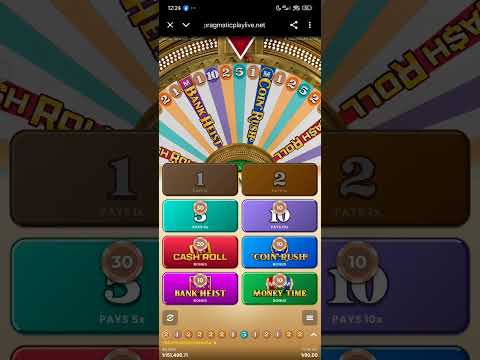
Wheel of Fortune and Dream Catcher are live dealer game show hybrids that strip back complexity to focus purely on a spinning wheel. In casino terms, they replace traditional card or dice mechanics with a high-velocity randomizer. Your only practical decision is where to place your bet on the wheel’s segments—like number or multiplier wedges—before the host spins. The house edge is baked directly into the payout table, typically higher on low-probability multipliers. To manage bankroll, avoid chasing the massive 40x or 7x segments in Dream Catcher; instead, focus on 1x or 2x bets for frequent, smaller returns. These games thrive on rapid play, so session discipline matters more than any selection strategy—pace yourself.
Random bonus rounds and multiplier segments
In game show hybrids like Wheel of Fortune and Dream Catcher, random bonus rounds and multiplier segments are triggered unpredictably after a spin, often landing on specific numbered wedges or segments. These segments instantly multiply your base bet by a set value, such as 2x, 7x, or 50x, before the main payout is calculated. For example, hitting a multiplier segment on Dream Catcher can dramatically increase winnings from a subsequent successful wheel segment. The exact multiplier value and its triggering segment are predetermined by the game’s math model, but appear random to the player. This mechanic adds volatility, making random multiplier triggers a key draw for risk-tolerant players seeking amplified payouts.

Audience participation features
Audience participation features transform game show hybrids like *Wheel of Fortune* and *Dream Catcher* from passive viewing into an interactive casino experience. Unlike standard slots, these games allow live spectators to vote on bonus rounds or select mystery prizes, directly influencing the outcome for active players. This real-time engagement creates a shared thrill, as the crowd’s collective decision can unlock massive multipliers. Live spectator voting is a core mechanic, making every spin a communal event where your voice impacts the game’s momentum. You are not just watching; you are playing a strategic role in the action.
- Vote on bonus triggers or multiplier wheels during live streams.
- Select hidden prize segments to reveal for the current player.
- Activate community-wide reward boosts through collective chat commands.
Different Types of Casino Games You Can Play Today
Slot Machines: Classic Reels and Modern Video Slots

Table Games Like Blackjack, Roulette, and Poker
Live Dealer Options for Real-Time Play
How Each Casino Game Works and What You Need to Know
Understanding Random Number Generators in Slots
